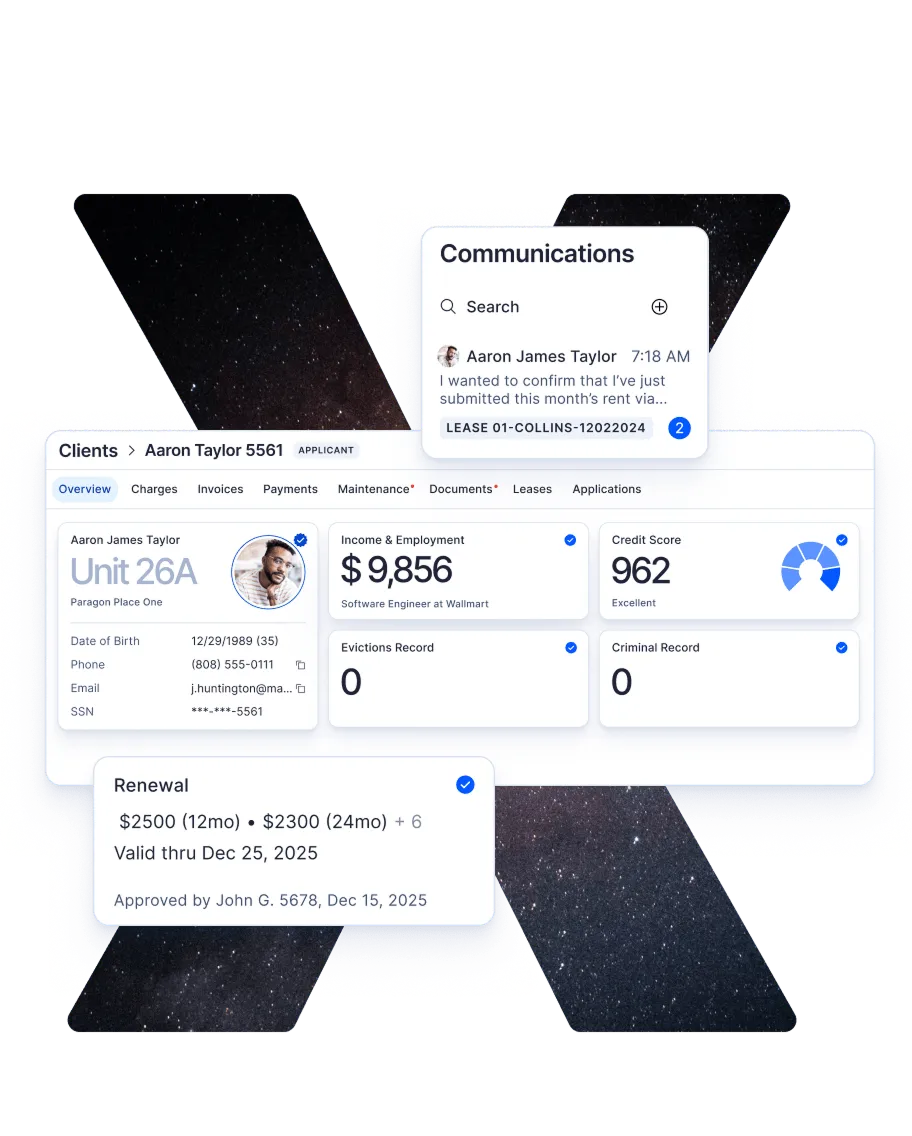
Tenant screening used to be simple: pull a credit report, check for evictions, verify employment, make a decision. The fraud landscape has changed — and most screening processes haven’t kept up.
The New Fraud Landscape
Synthetic identity fraud — where bad actors create entirely new identities by combining real and fabricated information — has become the fastest-growing type of financial fraud in the US. The Federal Reserve estimates it costs lenders $6 billion annually, and it’s now reaching the rental market.
At the same time, AI tools have made it trivially easy to generate convincing fake documents. Pay stubs, employment verification letters, bank statements — all can be created in minutes with commercially available tools.
How Synthetic Identities Work
A synthetic identity typically combines:
- A real Social Security number — often belonging to a minor, elderly person, or deceased individual.
- Fabricated personal details — a made-up name, date of birth, and address.
- Manufactured credit history — added as an authorized user on existing accounts to build a credit file.
- AI-generated documents — pay stubs, employment letters, and bank statements that support the fabricated identity.
The result: an applicant with a legitimate-looking credit report and convincing income documentation. They sign a lease, move in, and stop paying within 2–3 months. Eviction costs average $3,500+, plus lost rent.
Why Traditional Screening Fails
- Credit reports don’t verify identity. They confirm a credit file exists — not that the person presenting the application owns that SSN.
- Document review is visual. Property managers look at pay stubs as PDFs, with no validation that they came from the actual employer.
- No cross-referencing. Traditional screening doesn’t compare application income against actual bank deposits.
- Inconsistency detection is manual. With 20+ applications to review, details get missed.
The biggest vulnerability in tenant screening isn’t the credit check — it’s the assumption that the person applying is who they say they are.
Multi-Source Verification
The solution isn’t better documents — it’s verifying information at the source. This is the approach we built into Leazpass.
- Step 1: Identity verification via Plaid. The applicant connects their bank account; we verify the identity matches the application. No documents to fake.
- Step 2: Income verification via payroll. Leazpass connects directly to the applicant’s payroll provider through Plaid — pulling actual income from the source system. A generated pay stub can’t fake a payroll API connection.
- Step 3: Credit & background via TransUnion. Standard credit, criminal, and eviction checks — cross-referenced against the verified identity and income data.
- Step 4: AI risk scoring. Leazpass’s AI engine evaluates all data points together, looking for inconsistencies and risk signals — a 0–1000 composite score with full explainability.
Building Fraud-Resistant Screening
- Verify at the source. Never rely on applicant-provided documents.
- Cross-reference everything. Does the employer on the credit report match the payroll data?
- Automate consistency checks. AI catches every discrepancy a human reviewer misses.
- Document your process. Consistent, documented decisions protect from fair housing claims.