There’s a $2 billion market that the PropTech industry has collectively decided to ignore. Not because it’s too small — it’s massive. Not because the problems aren’t painful — they’re excruciating. The mid-market landlord segment, property managers with roughly 10–200 units, falls into a dead zone between enterprise platforms and consumer-grade tools.
We’ve spent the last two years studying this gap, talking to hundreds of landlords, and building products specifically for this overlooked market. Here’s what we found.
The Mid-Market Gap
The U.S. rental market has roughly 48 million rental units:
- Large institutional portfolios (500+ units) — well-served by enterprise platforms like Yardi, RealPage, and Entrata, at $5–$15 per unit per month plus dedicated staff.
- Small single-property landlords (1–5 units) — adequately served by consumer tools like Avail or TurboTenant, or even spreadsheets.
- The mid-market (10–200 units) — too complex for spreadsheets, too small for enterprise software. Roughly 8 million units, over $120 billion in annual rental income.
That last segment faces the same operational complexity as institutional managers — leasing, maintenance, utility billing, screening, accounting, compliance — without the budget for enterprise tools or the staff to operate them.
I manage 85 units across four buildings. I need the same capabilities as someone managing 5,000 units — just at a price and complexity level that makes sense for my operation.
Who Gets Ignored
- The growing owner-operator — started with a duplex, now manages 30–80 units, wears every hat, runs on a patchwork of spreadsheets and apps.
- The regional property manager — manages 100–200 units for a few owners, tried Yardi, abandoned it after a painful implementation, now runs on Buildium or AppFolio with gaps.
- The accidental portfolio — inherited or accumulated 15–50 units, needs software but doesn’t want to become a software expert.
Why Nobody Builds for Them
- Enterprise is easier to monetize. One 5,000-unit deal at $10/unit is $50,000/month; matching that from mid-market customers means 50–100 separate accounts.
- The feature complexity trap. Enterprise platforms have 15+ years of features and deep integrations — hard to match for a customer who can afford $200–$500/month.
- The “good enough” fallacy. Mid-market landlords aren’t actually fine with spreadsheets — we estimate the average 50-unit landlord loses $15,000–$25,000 per year in operational inefficiency.
What Mid-Market Landlords Actually Need
- Tenant screening that actually works — multi-source verification with a consistent, legally defensible decision framework.
- Utility billing without the spreadsheet — RUBS automation that handles the math, invoices, and payments.
- Resident communication at scale — centralized communication that handles routine inquiries automatically.
- Pricing that scales with them — per-unit pricing that starts low, no setup fees or annual commitments.
Filling the Gap
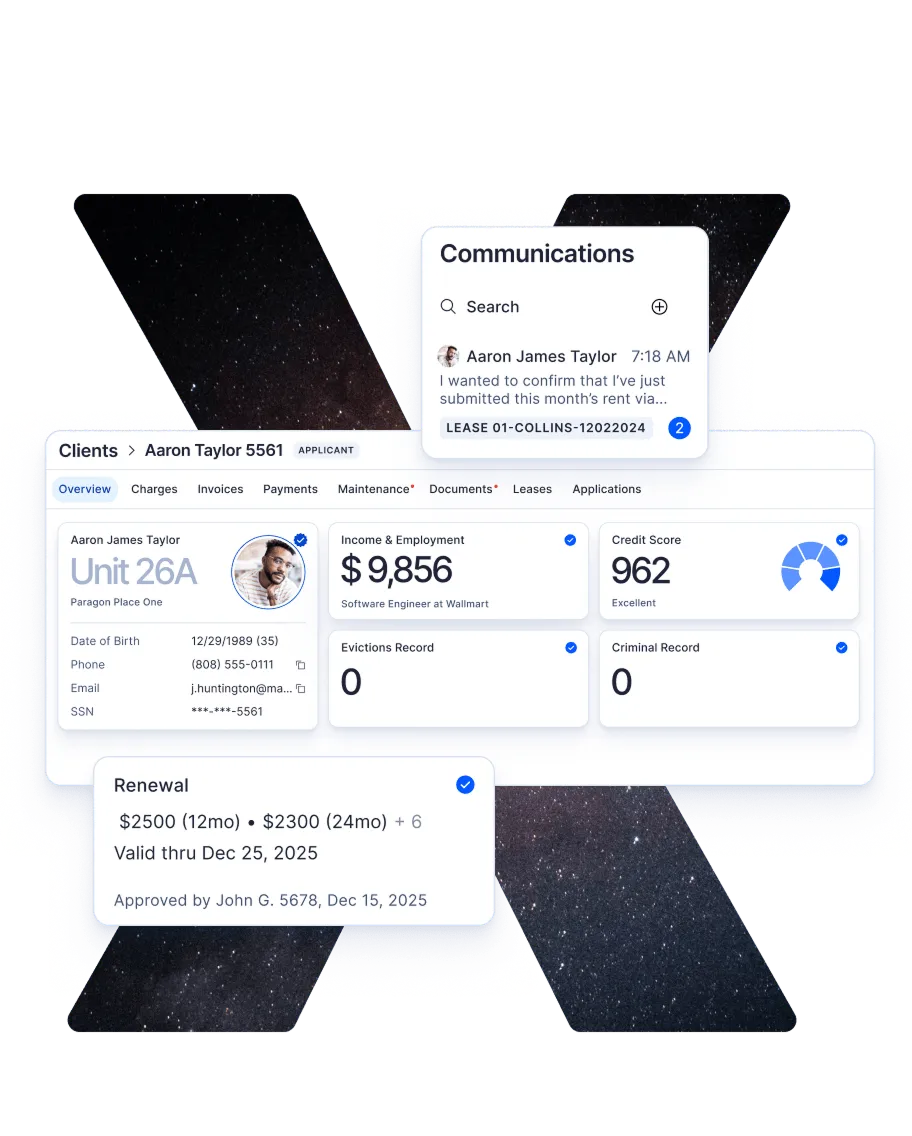
This is the thesis behind everything we build at ParagonID. Our product suite is designed for the mid-market property manager: Leazbee (AI-native property management), Leazpass (AI-powered tenant screening), and QuickSplit (RUBS utility billing automation). Each is priced for the mid-market, works out of the box, and is built with AI at the core — not bolted on as an afterthought.